
Quick Answer
Start with the room formula, measure before shopping, and use source-checked products only after the design direction is clear.
How To Use This Guide
Use the checklist to plan the room first, then turn the best ideas into a product edit after source checks. Riverwood keeps design advice separate from factual product claims; see our editorial standards and affiliate disclosure.
Give the entry one job
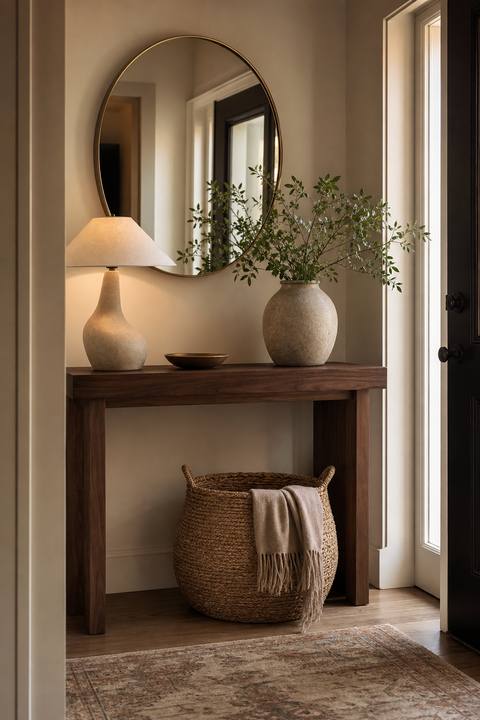
A small foyer works best when it has one clear function: landing zone, visual welcome, or storage moment. Trying to make it do all three usually creates clutter.
Anchor the wall
A mirror, framed art, textile, or small gallery moment helps the entry feel intentional. The anchor should be wider than the console or bench feels comfortable, not tiny and floating.
Add one useful texture
A basket, woven tray, ceramic bowl, or wood hook rail brings utility and warmth. Keep the material palette narrow so the entry reads calm instead of crowded.
Use the formula as a sequence
Treat entryway pieces that make a small foyer feel finished like a sequence, not a shopping list. Start with the biggest visual anchor, then add support pieces only after the scale, lighting, and material direction are working together.
- Set the anchor first: art, mirror, bed, console, rug, or main light source
- Add the functional piece second: storage, lamp, tray, curtain, or table surface
- Finish with one texture and one personal detail instead of several small fillers
What to measure before buying
Most budget mistakes happen before checkout. A piece can be affordable and still become expensive if it is the wrong size, hard to return, or visually too small for the room.
- Overall width, depth, and height of the target wall or surface
- Clearance for doors, drawers, chairs, walking paths, and outlets
- Nearby heights, including mattress, sofa arm, console top, window trim, and art centerline
- Shipping, assembly, return window, and whether the item can be moved easily
Designer-looking mistakes to avoid
A room usually looks less expensive when every choice is small, shiny, matching, or purely decorative. Riverwood's approach is to make fewer choices work harder.
- Do not buy a full matching set when one repeated finish would be enough
- Do not fill every surface; leave open space so the strongest pieces read clearly
- Do not use trend language as a substitute for measurements and material checks
- Do not publish claims about durability, comfort, installation, or material quality without source support
How to turn this into a source-checked edit
Once the room formula is clear, the shoppable version should be built from verified product details. That means the product table comes after the design logic, not before it.
- Record product URL, retailer, date checked, dimensions, material wording, and image-use status
- Separate editorial style notes from factual product claims
- Add alternatives at different price points only after checking each source page
- Keep the final recommendation draft-only until affiliate and platform policies are approved
Frequently Asked Questions
What is the first step for entryway decor ideas?
Start with the largest visual anchor, then check measurements before buying smaller decorative pieces.
When should this guide become shoppable?
Only after the product options have source URLs, dimensions, material wording, image-use status, affiliate approval, and a last-checked date.