
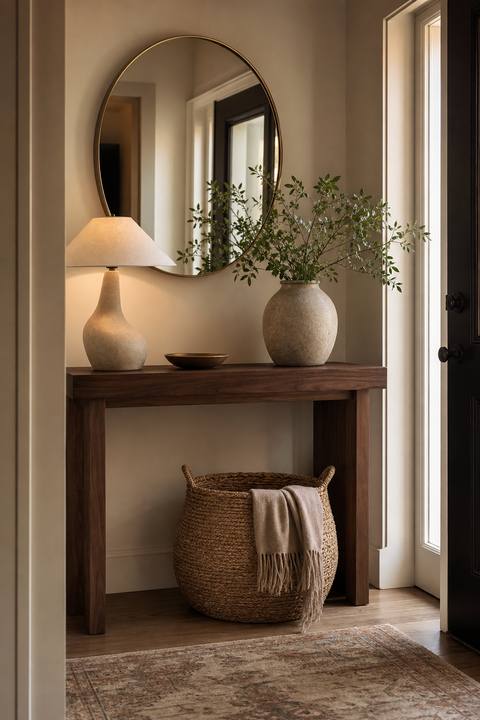
Quick Answer
Mirrors make rooms feel larger when they reflect light, a calm view, or a strong focal point, and when their size is proportional to the wall and furniture below.
How To Use This Guide
Start with the room formula, then source-check products before shopping. Riverwood separates design advice from product claims; see our editorial standards and affiliate disclosure.
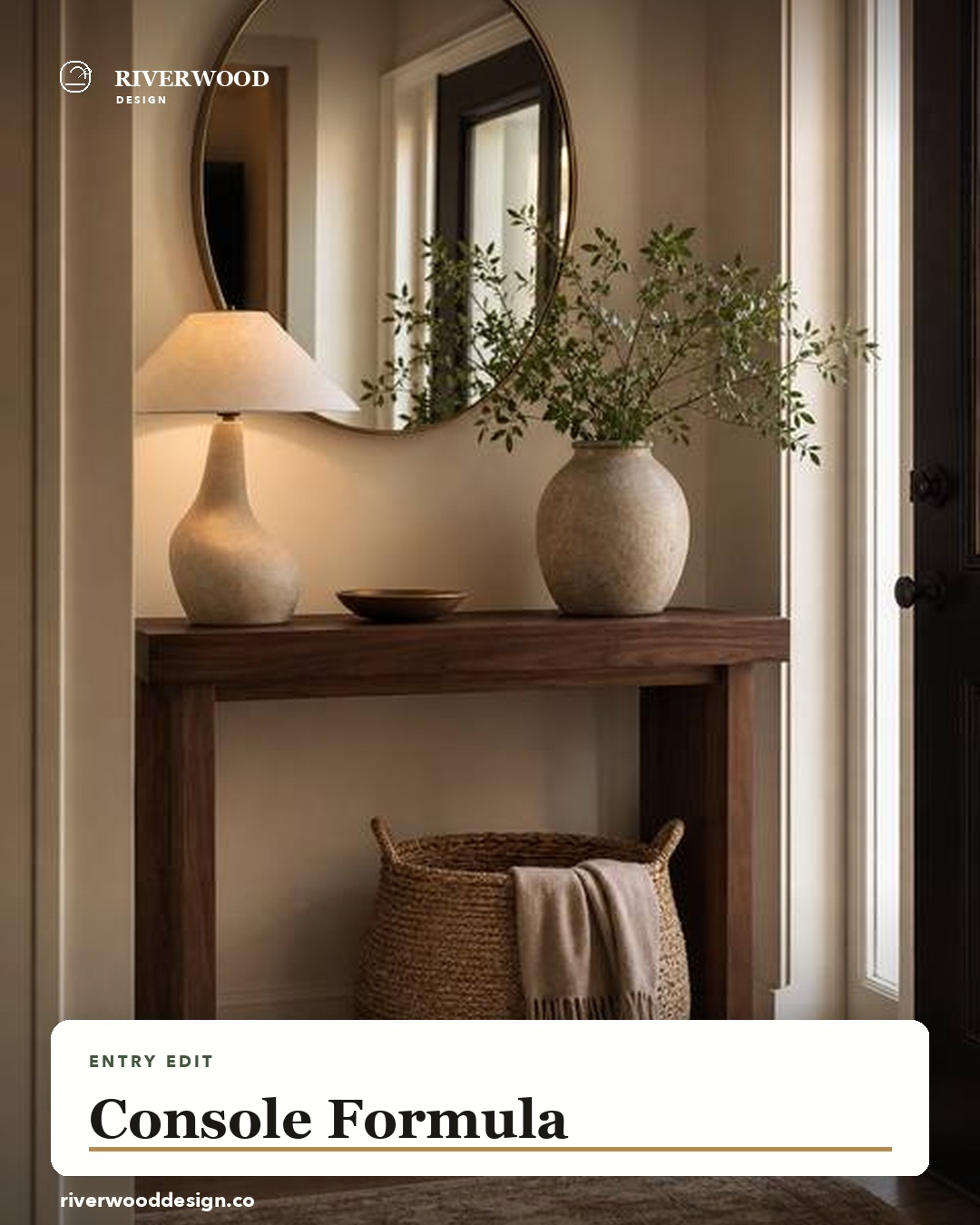
Pinterest Ready
Save the mirror scale guide
This vertical image is prepared for a saveable pin or social board. Use the article for the full source-check notes, then open the product panel for current retailer details.
View source-linked boardsBudget Moves
- Buy the largest appropriate size before paying for ornate detail.
- Use mirrors to add light where new fixtures are not possible.
- Check hanging hardware and weight.
- Avoid safety or installation claims unless the product instructions support them.
- Try restyling with pieces from another room before buying anything new.
- Buy fewer, larger decor pieces instead of several small objects that read as clutter.
Reflect something worth seeing
A mirror aimed at clutter doubles the clutter. Place mirrors where they reflect a window, art, lamp, plant, or open area.
Scale matters more than ornament
A mirror that is too small can look like an afterthought. Choose width based on the console, dresser, fireplace, or wall it supports.
Pick shape for contrast
Round mirrors soften straight furniture. Rectangular mirrors add architecture. Arched mirrors can add height without heavy detail.
How to apply the idea without adding clutter
The safest way to use mirrors that make rooms look bigger is to decide what the room is missing first: height, softness, storage, light, color, or texture. Add only the piece that solves that gap, then stop and reassess.
- Remove weak filler before adding new decor
- Keep one empty area on every major surface
- Repeat a color or material so the new piece has context
The styling test before you buy
If a decor piece only works in one exact corner, it may not be the best budget buy. Look for pieces that can move between a console, shelf, coffee table, bedroom, or dining room so the home gets more use from every purchase.
- Can it work in at least two rooms?
- Does it add a new shape or texture?
- Will it still look useful when seasonal decor is removed?
Common mistakes to avoid
The common mistake with mirror ideas to make room look bigger is buying from a single pretty image instead of checking how the idea works with the room's actual scale, light, traffic, and existing finishes.
- Buying several small fillers instead of one better-scaled piece
- Ignoring height relationships between furniture, lighting, art, and windows
- Using too many finishes when one repeated material would calm the room
- Publishing product claims before checking the source page
Source-check rules before it becomes shoppable
Riverwood can turn this into a product roundup only after each product is checked against the source page. That protects readers from stale prices, vague material claims, mismatched dimensions, and unsupported review language.
- Record the product URL and date checked
- Confirm dimensions, materials, color name, care notes, and return rules
- Do not claim comfort, durability, or performance without testing or reliable source support
- Use retailer images only when image rights and affiliate rules allow it
Frequently Asked Questions
Where should a mirror go in a small room?
Place it where it can reflect light or a calm focal point, not directly toward a cluttered area.
What mirror shape is most versatile?
Simple round, arched, and rectangular mirrors are usually the easiest to reuse in different rooms.
What should I check before shopping for mirror ideas to make room look bigger?
Check measurements, existing finishes, room traffic, return rules, material language, and whether the piece solves a real room problem instead of only looking good in a product photo.
How does Riverwood keep these ideas source-safe?
Riverwood keeps design guidance separate from product claims. Prices, stock, materials, dimensions, reviews, and performance claims are added only after source checks and affiliate-policy approval.